


From the biggest names in the industry to the up-and-coming, Australian Fashion Week has become a global platform for Australian designers. But for two decades in the event’s history, one crucial voice was missing from the conversation.
The first all-Indigenous showcase at Australian Fashion Week wasn’t held until 2021, despite the event launching in 1996. It took seven years for the first Indigenous designer to even feature on the annual event’s schedule.
Now, First Nations Fashion + Design, a not-for-profit corporation completely run by Aboriginal and Torres Strait Islander people, is leading a revolution in the Australian fashion landscape with the historic return of the Reclamation Runway.
Know the news with the 7NEWS app: Download today
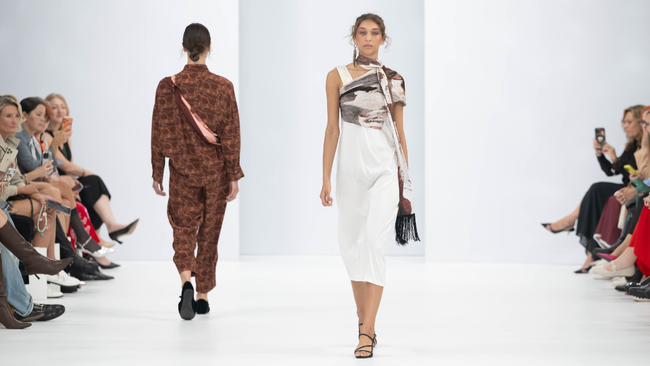
This year’s Reclamation Runway featured six First Nations designers, 24 Indigenous models and a majority Indigenous back-of-house crew.
Among the featured designers were sisters Tarisse and Sarrita King, Gurindji Waanyi women who have been artists for 20 years. Three years ago, they brought their art from canvas to fashion with the launch of their label KingKing.
“The future is Blak,” Tarisse said. “When people think about Australia, I don’t want them to think about prawns on a barbie. I want them to think about Aboriginal people, Aboriginal art, just like they do with the Haka in NZ.”
“It was powerful. It really was,” Sarrita said of the Reclamation Runway. “To be in the room with so many, not only amazing designers, models, but the back-of-house. We’re all on the same journey together.”
Tarisse adds, “It’s nice to be able to have that oneness together to start making a movement.”
The King sisters stress that Blak fashion is not a trend, but a lived experience, and that non-Blak-owned brands should not be using Aboriginal aesthetics without community consultation.
In 2019, research by Indigenous Fashion Projects and Australian Fashion Council found there was a lack of safe spaces for culture and community in the First Nations fashion sector. Connecting with industry resources and networks was also identified as a key area for policy opportunity.
Seven years on, runways like Reclamation mean autonomy.
“Reclamation is probably one of the best experiences of our life,” Tarisse said. “First Nations Fashion + Design are just leading the way in spaces like that, where it’s Aboriginal-led. So you go in there and it feels like family.
Fellow Indigenous designer Denni Francisco made history in 2023 when her brand Ngali became the inaugural First Nations label to secure a solo runway at Australian Fashion Week.
“We started because we felt that fashion was a really great way to share stories of our Country and celebrate the creativity that exists within our communities,” Francisco says.
When Ngali first presented 13 years ago, 22 other First Nations creators were involved in the process. This year, more than half the models in her runway show are First Nations.
“When we first started, you know, we’d have maybe a quarter of them or a third of them just simply because we couldn’t find them,” Francisco explains.
Francisco is conscious about working respectfully with First Nations artists. “We don’t take their artwork and produce it exactly as it is onto garments. The ownership of the artwork and the story of the artwork, which is incredibly important, remains with the artist.”

Verity van Ermel Scherer made her debut at this year’s Fashion Week with a standalone show of her swimwear resort wear collection, van Ermel Scherer. Verity’s grandmother Valerie, also known as Mattie, was part of the Stolen Generations, taken from Larrakia Country when she was six-years-old and brought to Sydney in the Croker Island exodus.
“Our story being completely stolen and losing the language in our culture, being able to work with First Nations people to grow that back for myself is really important,” van Ermel Scherer says.
“My meaning is to make sure that my grandmother’s story is never lost.”
For van Ermel Scherer, the label is a statement of sovereignty that honours her grandmother. A reclamation existing off the runway.
At the heart of any First Nations design is sharing story, regardless of medium. And at the heart of storytelling is mob.
“For us, looking back at that legacy of our father, it is all about sharing a story,” says Sarrita King. “That sharing of story is absolutely key to what motivates us, what keeps us passionate.”
“The story is for everybody. Absolutely everybody that wants to engage with Aboriginal culture.”
Storytelling through fashion is how they are taking back space, and most of all, sharing stories that honour respective mobs.
“Family comes with us everywhere,” the designers say. “Our whole career has been our community, our family, our legacy, our ancestors.”


